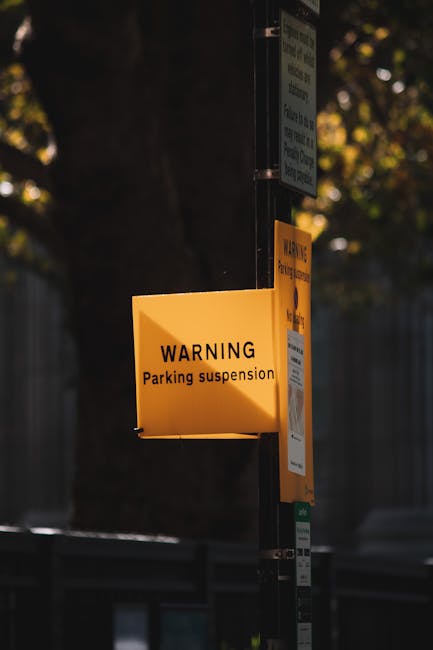
RBKC parking suspensions and removal permits explained
If you are moving house, delivering bulky furniture, or planning a commercial relocation in Kensington and Chelsea, parking can become the thing that quietly ruins the day. One minute you are loading boxes; the next, you are circling the block because the bay outside is occupied, or you have realised the van has nowhere legal to stop. That is exactly where RBKC parking suspensions and removal permits explained becomes useful. It is not glamorous, but it can save time, stress, and a fair bit of shouting into a phone at 8:15 on a wet morning.
In plain English, these are the parking arrangements that help you reserve space, protect access, and keep a move running smoothly within the Royal Borough of Kensington and Chelsea. Below, you will find a clear guide to how they work, when they matter, what mistakes to avoid, and how to plan them properly so the moving day does not turn into a traffic jam with cardboard.
Contents
- Why RBKC parking suspensions and removal permits explained matters
- How RBKC parking suspensions and removal permits explained works
- Key benefits and practical advantages
- Who this is for and when it makes sense
- Step-by-step guidance
- Expert tips for better results
- Common mistakes to avoid
- Tools, resources and recommendations
- Law, compliance, standards, or best practice
- Options, methods, or comparison table
- Case study or real-world example
- Practical checklist
- Conclusion
- Frequently asked questions
Why RBKC parking suspensions and removal permits explained Matters
Parking in RBKC is often tight, heavily used, and unforgiving when plans are vague. On a practical level, a removal van may need to stop close to the property for several hours, sometimes with repeated loading and unloading. If the space is not protected or the stopping arrangement is not suitable, your team can end up carrying sofas from the far side of the street. That sounds minor until you are doing it in the rain, through a narrow doorway, with a neighbour trying to get out.
The reason people search for RBKC parking suspensions and removal permits explained is usually simple: they need certainty. A parking suspension can reserve a bay or temporarily restrict parking in a specific place, while a removal permit or other moving-related parking arrangement helps a vehicle carry out the move without being ticketed or forced to move on. Different streets, different timings, different pressures. It all matters.
There is also a trust issue here. If you are hiring movers, you want a team that knows the local parking realities, not just how to carry boxes. A well-prepared move protects the property, keeps neighbours happier, and reduces delays. It can also help avoid the kind of awkward moment where the driver is standing by the cab, looking at a ticket, and muttering, "well, that's not ideal."
For domestic removals, office moves, furniture pick-ups, and even short one-off collections, the parking plan is often the difference between a smooth transfer and a messy, time-consuming one. If you are arranging a wider move, you may also want support from services such as home moves, office relocation services, or man and van support depending on the scale of the job.
How RBKC parking suspensions and removal permits explained Works
The basic idea is straightforward, even if the process can feel a little bureaucratic. A parking suspension temporarily removes normal parking rights from a bay or stretch of road. That space can then be used for a move, a delivery, or another approved activity. A removal permit or related parking permission, on the other hand, is designed to make sure your vehicle can operate lawfully where parking controls would otherwise get in the way.
In practice, the exact arrangement depends on the street, the type of vehicle, the duration needed, the time of day, and whether the location is in a busy controlled parking zone. The council may have different expectations for residential streets, commercial streets, timed bays, yellow line areas, or locations where access must be kept clear for other road users. The rules are not something to guess at. That part really matters.
Think of it like this: the move itself is one piece of the puzzle, but the kerbside is the stage on which everything happens. If the vehicle cannot legally stop where it needs to, the whole operation becomes clumsy. A suspension protects the space. A permit supports the vehicle. Together, they reduce risk and keep the workflow tidy.
For a smaller move, a man and van arrangement may need less elaborate planning than a full house removal, but parking still counts. For larger jobs using a bigger lorry, you may need a more careful setup, perhaps with a removal truck hire or moving truck solution that has enough room to load safely and efficiently. And if the job includes storage or extra handling, it is wise to allow a little more time than the bare minimum.
Key Benefits and Practical Advantages
The biggest benefit is simple: less uncertainty on the day. When parking is handled properly, your movers are not gambling on a vacant bay or hoping a neighbour will move their car. That alone can prevent a slow start.
Here are the main advantages people usually notice:
- Better access: the vehicle can get close to the property, which reduces carrying distance.
- Less delay: loading and unloading can happen without constant repositioning.
- Lower risk of penalties: you reduce the chance of parking tickets or enforcement issues.
- More professional presentation: the move feels organised instead of improvised.
- Reduced physical strain: shorter carry distances help protect staff and belongings.
- Smoother neighbour relations: less double-parking, less blocking, less hassle all round.
There is a quieter benefit too. A properly planned parking arrangement often calms everyone down. People work better when they are not improvising. The driver is calmer. The client is calmer. The person carrying the chest of drawers does not have to keep checking the clock. Small thing, big effect.
For households with fragile items or a long list of boxes, that extra control matters even more. If packing is part of the job, you may also want to look at packing and unpacking services so the move is not just parked correctly, but packed sensibly too.
Who This Is For and When It Makes Sense
This topic matters to a wide range of people, not just full-scale removals. If anything needs to stop near the kerb for more than a few minutes, parking planning can become relevant.
- Home movers: especially flats, terraced houses, and properties on narrow streets.
- Flat sharers: where access is awkward and vans may need a reserved stopping place.
- Landlords and letting agents: when coordinating check-outs, check-ins, or bulky item removals.
- Businesses: particularly offices with equipment, archive boxes, or furniture to move.
- Retailers or commercial teams: when moving stock, fixtures, or display items.
- Furniture buyers and sellers: for single-item collections or deliveries that still need kerb access.
It also makes sense whenever the street is busy, the item is large, or the move window is tight. Truth be told, even a "small" job can turn into a headache if the vehicle has nowhere to stop. A quick sofa collection sounds simple until you discover the nearest legal parking space is two streets away.
If that sounds familiar, a practical service like furniture pick-up or a flexible man with van arrangement may still need proper parking support. Small job, same problem.
Step-by-Step Guidance
If you are trying to plan parking for a move in RBKC, here is the clearest way to think about it.
- Work out the vehicle size and time on site. A small van and a two-hour collection are very different from a full-day house move with a larger truck.
- Check the exact property access. Note whether the vehicle needs a bay, a single yellow line area, or temporary kerbside space close to the entrance.
- Identify the move date and time window. Midweek mornings, weekends, school runs, and evening traffic all change the picture.
- Decide whether you need a suspension, a permit, or both. The right answer depends on how the street is controlled and what the vehicle needs to do.
- Allow lead time. Do not leave parking arrangements until the last minute. People often do, of course, and then spend the next day regretting it.
- Coordinate with the moving team. Make sure everyone knows where the vehicle will stop, who is arriving first, and how long loading is expected to take.
- Prepare signage and access notes. If there are gates, concierge rules, lift bookings, or building restrictions, include those too.
- Keep your documents and references handy. If anything needs to be checked on arrival, you want the details immediately available, not buried in an email thread from three days ago.
One useful habit is to do a quick street-level scan the evening before. Look at how full the road is, where the nearest bays are, and whether there are obvious pinch points. It takes five minutes and can reveal things an online plan misses. A wet pavement, a low wall, a parked trades van. All the little realities.
If the move is larger, a more structured service such as house removalists may be better suited than trying to stitch things together yourself. The logistics start to matter more as volume grows.
Expert Tips for Better Results
A few practical habits make these arrangements much easier to manage.
- Book early in busy areas. RBKC streets can be tight, and demand for good kerb space is rarely low.
- Keep the move window realistic. Underestimating loading time is one of the easiest ways to create stress.
- Match the vehicle to the job. A van too small means multiple trips; a truck too large may be awkward in narrow streets.
- Share access details in advance. Mention steps, lifts, limited height, loading restrictions, and any building rules.
- Plan for weather. Rain changes loading time, handling, and the amount of care needed for boxed items and soft furnishings.
- Have a backup thought-out. If the suspended space is blocked or another vehicle is already there, know what the next option is.
One thing movers learn quickly: a clean, well-labelled load saves time at both ends. If you are already arranging access and parking, it is worth making the actual packing neater too. Otherwise you end up with a tidy kerbside plan and a messy pile of unmarked boxes inside. Not ideal.
For businesses, the same logic applies at a larger scale. If you are shifting desks, IT equipment, or stock, services like commercial moves can help keep the process structured from the start.
Common Mistakes to Avoid
Most problems are not mysterious. They come from rushing, guessing, or assuming a normal parking space will somehow become available when needed. It rarely does.
- Leaving arrangements too late: good intentions on Monday mean very little if the move is on Friday.
- Assuming one permit covers everything: parking permissions, access permissions, and building permissions are not always the same thing.
- Forgetting the vehicle size: what works for a small van may fail completely for a larger removal truck.
- Ignoring building rules: some properties need lift bookings, concierge notices, or specific arrival times.
- Not checking the actual street conditions: roadworks, event restrictions, and temporary changes can upset even a good plan.
- Overlooking loading time: moving a piano or large wardrobe is not the same as carrying three boxes and a lamp.
A slightly embarrassing but common one: people confirm the parking plan, then forget to tell the driver exactly where the space is. The van arrives, the team phones, somebody is looking in the wrong road, and ten minutes disappear for no good reason. Easy to avoid, though.
If you are handling the move yourself, a simple, well-planned man and van booking can reduce the risk of these mistakes. The key is coordination, not just transport.
Tools, Resources and Recommendations
You do not need fancy software to get this right. A few practical tools and habits are usually enough.
- Street photos: take pictures of the frontage, bay markings, and any restrictions.
- A simple timing plan: note arrival, loading, travel, and unload times in one place.
- Property access notes: include lift sizes, door widths, stair counts, and loading bay directions.
- Inventory list: useful for both planning and checking nothing goes missing.
- Contact list: keep the client, driver, and building contact details in one easy-to-find place.
For bigger moves, it is often smart to combine the parking plan with the transport plan. That may mean using moving truck hire where a larger vehicle is needed, or arranging removal truck hire if the load and access conditions call for a more robust setup.
If you want to understand who is behind the service and how the business approaches removals, a quick look at about us can also be helpful. And if you need to discuss your move details, contact us is the obvious next step. Simple as that.
Law, Compliance, Standards, or Best Practice
Parking suspensions and removal permits sit within a framework of local traffic management, access control, and safe moving practice. You do not need to be a parking specialist to understand the main point: the vehicle must operate in a way that respects the street rules and the conditions attached to the location.
Best practice usually means:
- checking the exact address and street layout before the move
- making sure the correct parking arrangement is in place for the intended vehicle
- allowing enough time for loading and unloading without overstaying
- keeping any permit or approval information available on the day
- respecting signs, bay markings, and any temporary restrictions
It is also wise to be cautious about assumptions. Local parking controls can vary street by street, and conditions can change with works, events, or temporary traffic measures. If you are unsure, ask early rather than trying to improvise later. That is usually the cheaper option, and definitely the calmer one.
From a wider moving best-practice point of view, protected access reduces the chance of damage, shortens manual handling distances, and gives crews room to work safely. That matters for people, furniture, and buildings. No one wants a scratched staircase or a knocked mirror on move day.
Options, Methods, or Comparison Table
Not every move needs the same parking setup. Here is a simple comparison to help you judge what is likely to fit.
| Option | Best for | Advantages | Trade-offs |
|---|---|---|---|
| Temporary parking suspension | Reserved kerbside access for a move or delivery | Clear space close to the property; less carrying | Needs planning and may not suit every street |
| Removal permit or access permission | Vehicles needing lawful access in controlled areas | Reduces enforcement risk; supports organised loading | Conditions can vary and must be checked carefully |
| Standard van without special arrangement | Very quick jobs in easy-to-park streets | Simple and flexible | Higher risk of delays or fines in busy areas |
| Full removal service with managed logistics | House or office moves with multiple items | Better coordination; less stress for the client | More planning needed, especially on access and timing |
In many cases, the best option is not the cheapest-looking one on paper. It is the one that actually works on the street outside your building. That tiny difference is where the time and money get saved.
Case Study or Real-World Example
Picture a two-bedroom flat move from a side street in Kensington. The household has a sofa, beds, boxes of books, and a few awkward pieces of furniture that cannot be left on the pavement for long. The first instinct is often to say, "We can probably just park nearby." Probably is doing a lot of work there.
Instead, the move is planned with a reserved kerbside space close to the entrance. The vehicle arrives, parks cleanly, and the team starts loading without constantly checking mirrors for approaching cars. The packing list is already in order, the route to the van is clear, and the stair carry is manageable. That means less back-and-forth, fewer pauses, and less chance of damage from repeated handling.
Now compare that with the same move without parking planning. The van arrives, the street is full, someone parks across the bay, the crew waits, and the client starts worrying about the clock. It still gets done, of course, but the atmosphere changes fast. You can almost hear the stress in the air. And once a move starts feeling rushed, little errors creep in.
That is why good parking planning is not just admin. It is part of the move itself.
Practical Checklist
Use this simple checklist before moving day.
- Confirm the move date and arrival window
- Check the vehicle size and access needs
- Review the street layout and kerbside restrictions
- Decide whether a suspension, permit, or both are needed
- Allow enough lead time for any approvals or arrangements
- Tell the moving team exactly where to stop
- Share building access notes, lift rules, and key contacts
- Prepare boxes, labels, and fragile items in advance
- Keep phone numbers and confirmation details close by
- Have a fallback plan if the space is unexpectedly occupied
If you can tick all of those off, you are already ahead of most last-minute moves. Honestly, that is half the battle.
Conclusion
RBKC parking suspensions and removal permits explained comes down to one practical truth: the moving day gets easier when the vehicle can stop where it needs to stop, legally and predictably. Whether you are moving a family home, relocating an office, or arranging a single furniture collection, good parking planning saves time, reduces hassle, and helps the whole job feel controlled rather than chaotic.
The best approach is to think ahead, match the parking plan to the size of the move, and keep the people involved fully informed. Small detail, big difference. That is especially true in busy London streets, where one poorly placed vehicle can throw off a whole morning.
If you are preparing a move and want a smoother experience from the kerbside to the last box, take the time to plan the parking properly. It is one of those unglamorous steps that quietly makes everything better.
Get a free quote today and see how much you can save.
Frequently Asked Questions
What does RBKC parking suspensions and removal permits explained actually mean?
It refers to the process of arranging parking control or parking access so a move, delivery, or removal vehicle can stop legally and close to the property in Kensington and Chelsea.
Do I always need a parking suspension for a house move in RBKC?
Not always. It depends on the street, the vehicle, the length of the stop, and what restrictions are already in place. Some jobs need a suspension; others may only need a permit or a simpler parking plan.
Is a removal permit the same as a parking suspension?
No, they are related but not identical. A suspension usually reserves or restricts the space itself, while a permit or access arrangement supports the vehicle's lawful use of that space or area.
How far in advance should I arrange parking for a move?
As early as possible. Busy streets, larger vehicles, and more complex moves all benefit from advance planning. Leaving it to the last minute is where problems usually start.
Can a small man and van job skip parking planning?
Sometimes, but not safely by default. Even a small job can be delayed if the van cannot stop near the property. For busy streets, it is still worth planning properly.
What happens if the reserved space is blocked on the day?
You need a fallback plan. The vehicle may have to wait, use an alternative lawful stopping place, or adjust the loading plan. That is why checking street conditions beforehand is helpful.
Do office moves need the same kind of parking planning as home moves?
Often, yes, and sometimes more so. Office equipment, desks, and IT items can take longer to load, which means kerbside access becomes even more important. Commercial moves need structure.
What should I tell the movers before the day?
Give them the exact address, the parking arrangement, the vehicle access point, any building restrictions, and any time limits. The clearer the brief, the smoother the day.
Are larger vehicles harder to manage in RBKC?
They can be. Narrow streets, tight corners, and limited stopping space can make larger trucks more awkward. That does not mean they are impossible, just that the parking plan matters more.
Can furniture pick-ups also need parking arrangements?
Yes. A single item can still require proper kerbside access, especially if it is heavy, bulky, or being collected from a difficult street.
What is the biggest mistake people make with parking for removals?
Assuming the street will work itself out on the day. It usually does not. The most common problems come from poor timing, missing details, or not checking whether the vehicle can legally stop where planned.
What is the best way to reduce stress on moving day?
Plan the parking early, match the vehicle to the job, and keep all access details in one place. Once the kerbside is sorted, the rest tends to feel much more manageable.